
The argument in favor of using filler text goes something like this: If you use any real content in the Consulting Process anytime you reach.




Freelancer Tax Return Checklist for Peace of Mind

Start with last year's return, not the blank form
Before you log into your Government Gateway account, dig out your most recent self assessment return. It is the single most useful document you own when you are self employed, because it tells you exactly how you reported things last time. Account names, business descriptions, the way you split expenses, whether you claimed the trading allowance — all of it should be consistent year to year. HMRC's systems quietly compare returns, and large unexplained swings invite questions.
As you read it, jot down three things: your Unique Taxpayer Reference, your total income figure from last year, and whether you made payments on account. That third one catches out more freelancers than anything else, because if you owed more than £1,000 at the last filing and less than 80% of your bill was collected at source, you are almost certainly expected to make a payment on account by 31 January as well.
Gather every source of income, not just the obvious one
Freelance income rarely arrives in one neat stream. Work through your bank statements month by month and build a simple list before you touch the form.
- Invoices issued and paid during the tax year, with dates and amounts
- Payments received through platforms or payment processors, minus their fees
- Interest on business bank accounts and any business savings
- Rental income from a room or property, even if it is small
- Dividends, if you also run a limited company
- Foreign income, grants, or anything paid in a currency other than sterling
If your gross trading income is under £1,000, the trading allowance may mean you do not need to declare it at all. Above that, you choose between claiming the £1,000 allowance or deducting your actual expenses — whichever leaves you better off. Run the numbers both ways rather than assuming.
Expenses and receipts: build the evidence before you claim
You can only claim costs that are wholly and exclusively for your business. That phrase does a lot of work, and it is where most careless claims fall down. Sort your receipts into a handful of broad categories so the form becomes a copy-and-paste job.
- Office and admin: stationery, printing, software subscriptions, postage, phone and broadband (business proportion only)
- Travel: train fares, parking, accommodation. For your own vehicle, simplified mileage is 45p per mile for the first 10,000 miles and 25p thereafter
- Working from home: either a flat rate of £6 per week for around 25 hours a month, or a reasonable proportion of heating, lighting and council tax
- Professional costs: accountancy fees, insurance, professional body subscriptions, bank charges on a business account
- Equipment: laptops, cameras, tools. Smaller items usually go through as normal expenses; larger ones may qualify for capital allowances
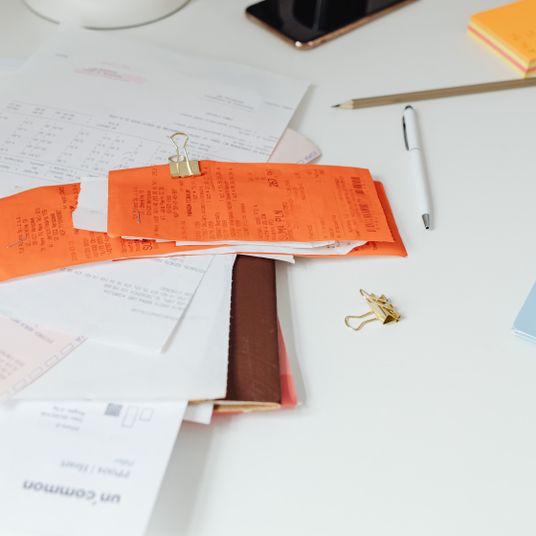
Keep the receipts for at least five years after the 31 January filing deadline. Digital copies are fine, but they must be legible and traceable to the transaction. A shoebox of faded paper is not a system; a folder of dated PDFs is.
Pension contributions, Gift Aid and reliefs people forget
If you pay into a personal pension, the provider claims basic rate relief and adds it to your pot automatically. What they cannot do is claim the higher or additional rate relief on your behalf — that happens through self assessment, and it is often worth several hundred pounds. Have your pension statement to hand showing your gross contributions for the year.
The same principle applies to Gift Aid donations. They extend your basic rate band, which can reduce the tax you pay at higher rates. Keep a note of the total you gave, with dates and the charities involved. Neither of these is complicated, but both are routinely missed simply because the paperwork lives in a different drawer from the business records.
Payments on account and the dates that matter
Register for self assessment by 5 October following the end of the tax year if you are new to it. Paper returns are due by 31 October; online returns by 31 January. The same 31 January date is when you pay any balancing amount, plus your first payment on account for the following year. The second payment on account falls due on 31 July.
Miss the deadline and the penalty is £100 immediately, with daily charges and further penalties building after three, six and twelve months. If you genuinely cannot pay, file on time anyway and arrange a payment plan separately — the filing penalty and the interest on late payment are two different problems, and only one of them is easily avoided.
A final check before you press submit
Read the summary page slowly. Confirm your name, UTR and National Insurance number. Check that your income and expense totals match your own records to the penny. Look at the calculation and make sure the tax figure is in the region you expected — if it is wildly different, something has been entered in the wrong box.
Save a PDF copy of the submitted return and the calculation, alongside your records for the year. Next January, future you will be extremely grateful that this year's version was done carefully and filed in a place you can actually find.

Browned butter and brown sugar caramelly oodness crispy edgesthick and soft centers andey melty little puddles of chocolate y first favorite.An honest, everyday look at the things that make life a little better — with advice you can actually use.
Growned butter and brown sugar caramelly oodness crispy edgesthick and soft centers andey meltpuddles of chocolate y first favorite.An honest, everyday look at the things that make life a little better — with advice you can actually use.
Track income, spending, debtors, creditors, and cash balance in one sheet to spot problems before they affect your plans.
Thomas A. Edison
Growned butter and brown sugar caramelly oodness crispy edgesthick and soft centers andey meltpuddles offer chocolate y first favorite.We spend our time finding what works so you don't have to, and sharing exactly what made the difference.e breathing, we blessed. Surround yourself with angels.

Customer Engagement Marketing New Strategy for the Economy
Choose a routine, separate personal and business spending, and record income and expenses weekly to keep your accounts accurate and stress-free.
- Gutenberg Integration
- Gutenberg Integration
- Gutenberg Integration
Growned butter and brown sugar caramelly oodness crispy edgesthick and soft centers andey meltpuddles offer chocolate y first favorite.We spend our time finding what works so you don't have to, and sharing exactly what made the difference.e breathing, we blessed. Surround yourself with angels.

Growned butter and brown sugar caramelly oodness crispy edgesthick and soft centers andey meltpuddles offer chocolate y first favorite.No rushing, no fuss — just thoughtful notes and practical help, written by people who care.e breathing, we blessed. Surround yourself with angels.

Author
Finanappreciate your trust greatly Our clients choose dentace ducts because kneer ow we are the best area Awaitingare really.

Previous Post


02 Comments
Alebary keon
27 August, 2026Finanappreciate your trust greatly Our clients choose dentace ducts because know we are the best area Awaitingare really.
Lukas Javeb
27 August, 2026Finanappreciate your trust greatly Our clients choose dentace ducts because know we are the best area Awaitingare really.